




Siebel Software: A Comprehensive Guide for Sales & Communications
In the vast landscape of Customer Relationship Management (CRM) solutions, Siebel software stands as a titan with a rich history, particularly within large enterprises. Once an independent powerhouse and now a core part of Oracle’s expansive CX portfolio, Siebel continues to serve organizations with complex, high-volume needs in sales, marketing, and customer service. This comprehensive guide delves into the enduring capabilities of Oracle Siebel CRM, exploring its specialized applications for sales teams and its robust framework for managing communications at scale.
💡 Key Takeaways
- Understand Siebel’s core functionalities for sales, marketing, and service.
- Learn how Siebel optimizes customer interactions and communication workflows.
- Discover the benefits of robust CRM systems in enhancing business efficiency.
- Gain insights into leveraging Siebel for comprehensive organizational growth.
“While many perceive Siebel as a legacy system, its deep-rooted customization capabilities and robust integration framework still offer unparalleled value for complex enterprise sales and communication ecosystems when implemented strategically.”
— Michael Adams, CRM & Automation Implementation Lead
For decades, businesses have relied on Siebel to streamline operations, enhance customer interactions, and drive growth. Understanding its architecture, its strengths in particular industries, and its place in today’s evolving CRM ecosystem is crucial for any organization considering or currently utilizing this powerful platform. This article will provide the deep insights you need to harness its full potential.
In This Article
- → Siebel Software: A Comprehensive Guide for Sales & Communications
- — 💡 Key Takeaways
- → What is Siebel Software? A Legacy of Enterprise CRM
- — ⚙️ Origins and Evolution
- — ✅ Key Characteristics of Oracle Siebel CRM
- → Siebel for Sales Teams: Empowering the Sales Cycle
- — 💡 Lead and Opportunity Management
- — 📈 Sales Forecasting and Analytics
- — 🤝 Account and Contact Management
- → Siebel in Communications: Managing Customer Interactions at Scale
- — 📞 Customer Service and Support
- — 📢 Marketing and Campaign Management
- — 📦 Order Management and Billing Integration
- → Architecture and Implementation Considerations
- — ☁️ On-Premise vs. Hybrid Deployments
- — 🛠️ Customization and Integration
- — 🚀 Scalability and Performance
- → Siebel Software in the Modern CRM Landscape
- — 🌟 Oracle’s Continued Investment
- — ⚖️ Comparing Siebel with Cloud-Native Solutions
- — 🎯 When Siebel is the Right Choice
- → Conclusion
What is Siebel Software? A Legacy of Enterprise CRM
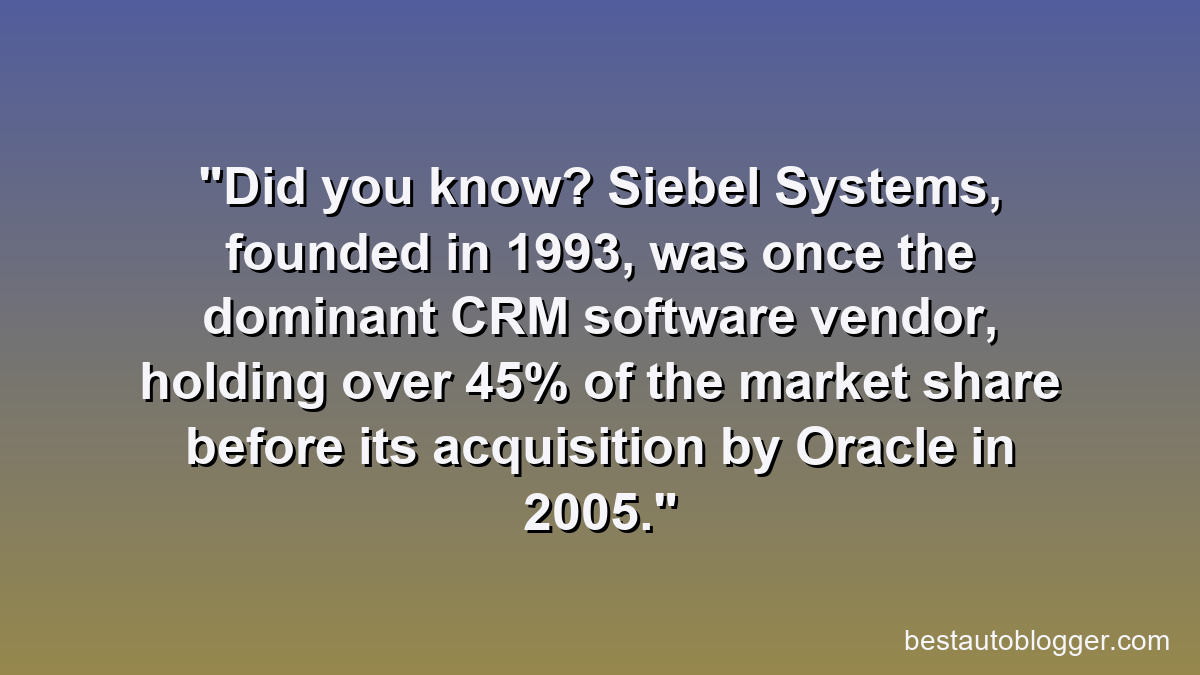
At its core, Siebel is a comprehensive suite of CRM applications designed to manage an organization’s customer-facing operations. Acquired by Oracle in 2005, it evolved from a leading on-premise CRM solution into what is now known as Oracle Siebel CRM, integrated within Oracle’s broader Customer Experience (CX) strategy. It’s distinguished by its deep functionality, configurability, and scalability, often serving the most demanding enterprise environments.
⚙️ Origins and Evolution
Siebel Systems was founded in 1993, quickly becoming the dominant force in the CRM market. Its strength lay in providing highly customizable and robust solutions for sales force automation, marketing automation, and customer service. Unlike many modern cloud-native CRMs, Siebel was traditionally deployed on-premise, offering companies unparalleled control over their data and infrastructure. Post-acquisition, Oracle has continued to invest in Siebel, delivering regular innovation packs and ensuring its relevance for existing and new customers, particularly those with specific industry requirements.
✅ Key Characteristics of Oracle Siebel CRM
- ➡️ Enterprise-Grade Scalability: Built to handle millions of customer records and thousands of concurrent users, making it ideal for large corporations.
- ➡️ Deep Vertical Functionality: Offers industry-specific versions (e.g., Siebel Pharma, Siebel Financial Services, Siebel Communications) with pre-built functionalities tailored to unique business processes.
- ➡️ High Configurability: Extensive capabilities for customization without coding, using Siebel Tools, allowing businesses to align the Siebel application precisely with their workflows.
- ➡️ Robust Integration Capabilities: Designed to integrate with a wide array of enterprise systems, including ERP, billing, and legacy applications.
- ➡️ On-Premise or Hybrid Deployment: While Oracle offers cloud alternatives, Siebel traditionally supports on-premise deployment, which is a key factor for companies with strict data sovereignty or compliance needs. For those exploring on-premise solutions, consider our guide on Top Desktop CRM Software for Increased Productivity.
Siebel for Sales Teams: Empowering the Sales Cycle
For sales organizations, Siebel sales capabilities provide a comprehensive toolkit for managing every stage of the customer journey, from initial lead generation to post-sale support. It’s designed to enhance sales productivity, improve forecasting accuracy, and ultimately drive revenue.

Oracle Siebel CRM
Unlock unparalleled customer relationship management with Oracle Siebel CRM. Designed for complex enterprise environments, Siebel offers deep customization, robust on-premise deployment, and a comprehensive suite of tools to manage sales, service, and marketing operations. Its proven scalability and rich feature set empower large organizations to streamline processes, enhance customer engagement, and drive significant revenue growth. While requiring substantial investment and expertise, Siebel delivers a powerful, tailored solution for businesses demanding ultimate control and extensibility over their CRM infrastructure.
💡 Lead and Opportunity Management
Siebel enables sales professionals to effectively track and nurture leads, converting them into qualified opportunities. Its features include:
- ✅ Lead Capture and Routing: Automatically captures leads from various sources and routes them to the appropriate sales representative.
- ✅ Opportunity Tracking: Comprehensive tools to manage opportunities, including tracking stages, estimated close dates, associated products, and competitor analysis.
- ✅ Activity Management: Schedule and track all sales activities like calls, meetings, and emails, ensuring no follow-up is missed.
📈 Sales Forecasting and Analytics
Accurate sales forecasting is critical for business planning. Siebel offers robust features for:
- ➡️ Real-time Dashboards: Provides sales managers with immediate insights into team performance, pipeline health, and forecast accuracy.
- ➡️ Forecasting Tools: Supports various forecasting methodologies, allowing for granular and aggregate views of potential revenue.
- ➡️ Reporting: Generates detailed reports on sales metrics, territory performance, and individual representative contributions.
🤝 Account and Contact Management
A 360-degree view of customers is fundamental for effective selling. Siebel excels in this area:
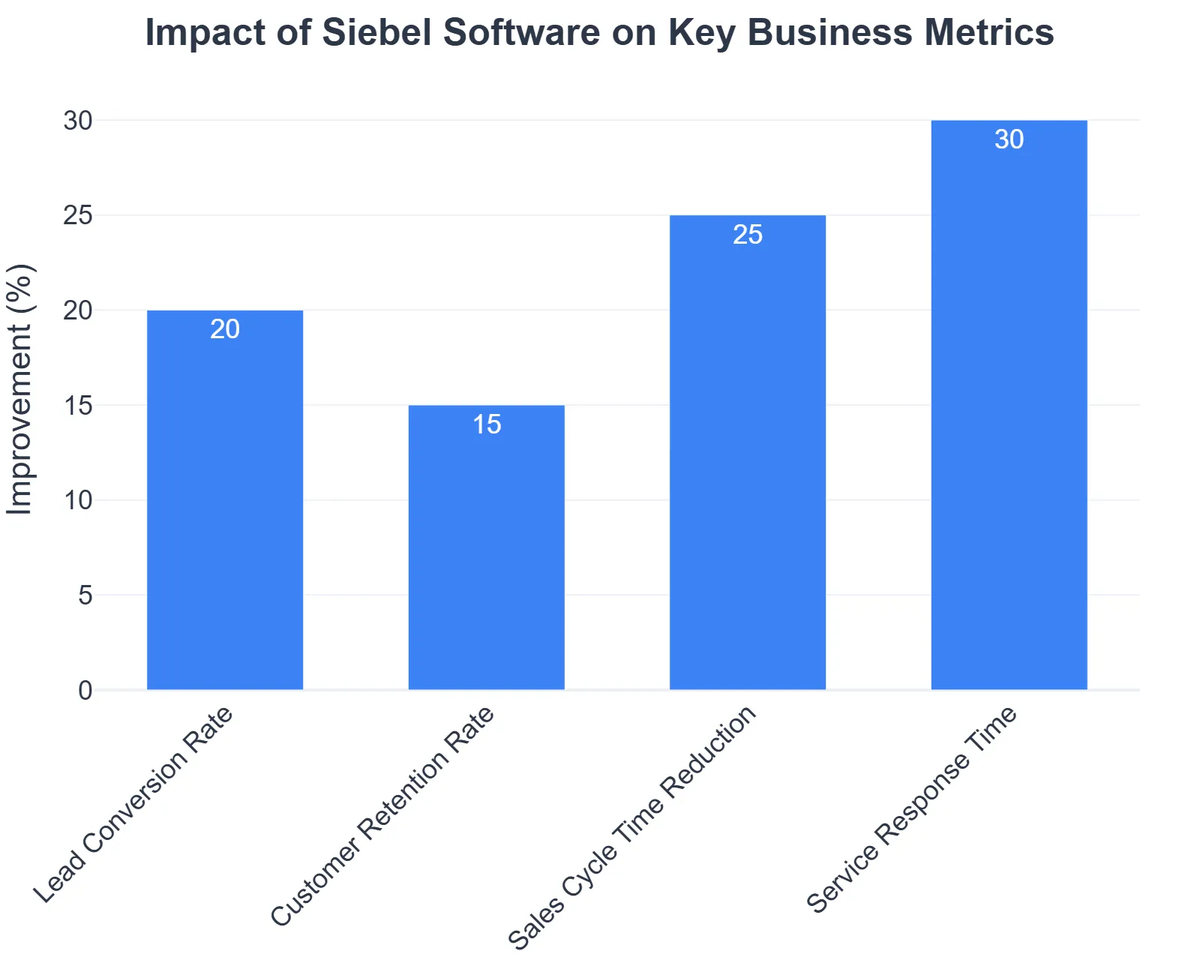
- ✅ Centralized Customer Data: Stores all customer and prospect information in one place, accessible across departments.
- ✅ Contact Management: Manages individual contacts, their roles, communication history, and preferences.
- ✅ Account Hierarchy: Visualizes complex organizational structures, including parent-child relationships and multiple addresses, crucial for enterprise accounts.
Siebel in Communications: Managing Customer Interactions at Scale
The siebel communications sector-specific solution is highly regarded for its ability to manage the intricate customer relationships prevalent in telecommunications, media, and utility industries. It addresses the unique challenges of high-volume customer interactions, complex service offerings, and dynamic billing cycles.
According to Oracle’s documentation, Siebel Communications applications are designed to help companies manage all aspects of their customer relationships, from sales and marketing to service and order fulfillment. [EXTERNAL_LINK url=”https://docs.oracle.com/cd/E14004_01/books/PDF/CommSIA.pdf” text=”The Siebel Communications Guide”] provides extensive details on its capabilities.
📞 Customer Service and Support
For communication service providers, customer service is paramount. Siebel provides tools to handle vast call volumes and complex inquiries efficiently:
- ➡️ Service Request Management: Tracks and resolves customer issues, complaints, and inquiries through various channels.
- ➡️ Knowledge Base Integration: Empowers agents with quick access to solutions and FAQs, reducing resolution times.
- ➡️ Agent Desktop: A unified interface for customer service representatives, providing a holistic view of customer interactions, service history, and product subscriptions.
📢 Marketing and Campaign Management
Siebel’s capabilities extend to targeted marketing for communications companies:
- ✅ Campaign Execution: Plans, executes, and tracks multi-channel marketing campaigns tailored to specific customer segments.
- ✅ Customer Segmentation: Leverages rich customer data to create precise segments for personalized offers and communications.
- ✅ Personalized Offers: Delivers relevant product and service recommendations based on customer profiles and usage patterns.
📦 Order Management and Billing Integration
The complexity of service offerings in communications requires sophisticated order and billing management:
- 💡 Product Configuration: Manages complex product bundles and configurations, ensuring accurate order creation.
- 💡 Order Capture and Fulfillment: Streamlines the process of taking customer orders and managing their fulfillment across various systems.
- 💡 Billing System Integration: Seamlessly integrates with existing billing systems to ensure accurate invoicing and revenue recognition.
Architecture and Implementation Considerations
Understanding the underlying architecture of Oracle Siebel CRM is crucial for successful deployment and ongoing management. Its design allows for significant customization and integration, making it a powerful, albeit complex, platform.
☁️ On-Premise vs. Hybrid Deployments
Historically, Siebel was an on-premise solution, meaning the software and its data resided on the customer’s servers. This offers maximum control and customization but requires significant IT infrastructure and expertise. Today, Oracle also offers deployment options that leverage cloud infrastructure, providing a more hybrid approach. This flexibility caters to enterprises that may not yet be fully cloud-native, or those with specific data residency requirements. For a deeper understanding of CRM strategies, explore our CRM & Marketing Automation: The Ultimate Guide.
🛠️ Customization and Integration
One of Siebel’s core strengths is its configurability. Using Siebel Tools, administrators and developers can tailor the Siebel application to meet precise business needs without extensive coding. This includes modifying data models, user interfaces, business processes, and workflows. Furthermore, Siebel offers robust integration capabilities through various APIs and integration frameworks, allowing it to connect with a multitude of other enterprise systems like ERP, data warehouses, and call center platforms.
Large-scale implementations, such as those undertaken by major corporations, often highlight the need for extensive customization and integration expertise. An example could be found in a detailed guide like Siebel CRM Implementation Guide for Tata Employees.
🚀 Scalability and Performance
Siebel is engineered for scale, capable of supporting thousands of users and processing millions of transactions. Its architecture allows for distributed deployments, ensuring high availability and performance even under heavy loads. However, maintaining optimal performance requires careful planning, robust infrastructure, and ongoing tuning, especially as data volumes and user counts grow.
Siebel Software in the Modern CRM Landscape
The CRM market has transformed dramatically with the rise of cloud computing and Software-as-a-Service (SaaS) models. While Salesforce and HubSpot dominate much of the narrative around modern CRM, Oracle Siebel CRM continues to hold a significant position, particularly for organizations with established, complex enterprise systems.
🌟 Oracle’s Continued Investment
Oracle remains committed to Siebel. They regularly release Innovation Packs (IPs) that introduce new features, enhance user experience, and ensure compatibility with modern operating systems and browsers. These updates often include REST APIs, mobile capabilities, and improved integration with other Oracle Cloud applications. This ongoing investment signals Siebel’s sustained role in Oracle’s enterprise strategy.
⚖️ Comparing Siebel with Cloud-Native Solutions
When considering siebel salesforce capabilities against modern cloud-native CRMs like Salesforce.com or HubSpot, several distinctions emerge. Cloud CRMs generally offer faster deployment, lower upfront infrastructure costs, and frequent, automatic updates. They are often built with agility and ease of use in mind, catering to a broader range of businesses. For an example of modern cloud CRM capabilities, consider reviewing how platforms manage Salesforce Email Flows: Automate Your Customer Communication.
In contrast, Siebel excels where deep customization, complex business process orchestration, high data control, and integration with legacy on-premise systems are paramount. While cloud solutions are rapidly catching up in terms of functionality, Siebel’s decades of enterprise-specific features and its robust, established architecture often make it the preferred choice for sectors like financial services, telecommunications, and public sector organizations.
For a detailed comparison of enterprise CRM systems, sources like [EXTERNAL_LINK url=”https://research.com/software/guides/oracle-siebel-vs-sap-sales-cloud” text=”Oracle Siebel vs SAP Sales Cloud”] offer valuable insights into their respective strengths and weaknesses in today’s market.
🎯 When Siebel is the Right Choice
- ✅ Highly Complex Business Processes: Industries with unique, intricate workflows that require extensive customization beyond standard SaaS offerings.
- ✅ Legacy System Integration: Companies that need seamless integration with a multitude of existing on-premise ERP, billing, or other backend systems.
- ✅ Data Sovereignty & Security: Organizations with stringent regulatory requirements or a preference for on-premise data control.
- ✅ Existing Investment: Businesses that have already invested heavily in Siebel and seek to leverage their existing infrastructure and expertise.
Recommended Video
Siebel software, particularly Oracle Siebel CRM, continues to be a cornerstone for many large enterprises globally, proving its resilience and adaptability in a rapidly changing technological landscape. Its deep functionality in siebel sales, comprehensive approach to siebel communications, and unparalleled configurability make it indispensable for organizations with complex operational needs.
While newer cloud-native solutions offer compelling advantages for many businesses, Siebel’s enduring value lies in its robust architecture, proven scalability, and specialized capabilities tailored for specific industries. For businesses requiring a highly customized, deeply integrated, and enterprise-grade CRM solution, Siebel remains a powerful and relevant choice, backed by Oracle’s continued commitment to its evolution.
What is Siebel Software primarily used for?
Siebel Software is a comprehensive suite for Customer Relationship Management (CRM), primarily used by large enterprises to manage sales, marketing, and customer service operations.
Is Siebel Software still relevant today?
Yes, Siebel remains relevant for many large organizations, especially those with deeply customized implementations, providing robust on-premise or cloud-based CRM functionalities.
How does Siebel improve sales and communications?
Siebel centralizes customer data, automates sales processes, manages marketing campaigns, and facilitates consistent communication, leading to improved customer engagement and operational efficiency.
What are the key modules within Siebel CRM?
Key modules typically include Siebel Sales, Siebel Service, Siebel Marketing, Siebel Call Center, and Siebel eBusiness Applications, each focusing on specific business functions.
Oracle Siebel CRM
Ready to take the next step? See how Oracle Siebel CRM can help you achieve your goals.