




Mautic & GDPR Compliance: Protecting Your Data
In today’s digital landscape, data privacy isn’t just a buzzword; it’s a fundamental right and a legal necessity. For businesses leveraging marketing automation, understanding and adhering to regulations like the General Data Protection Regulation (GDPR) is paramount. This comprehensive guide delves into how Mautic GDPR compliance works, equipping you with the knowledge and actionable steps to protect your data subjects’ privacy while maximizing your marketing efforts. We’ll explore Mautic’s features, best practices, and your overarching responsibilities in maintaining a compliant marketing ecosystem.
💡 Key Takeaways
- Mautic’s open-source nature provides transparency for GDPR adherence.
- Implementing consent management and data subject rights is crucial for compliance.
- Regular data audits and privacy-by-design principles strengthen your Mautic setup.
- Leverage Mautic features like contact segmentation and data deletion for GDPR.
“Achieving GDPR compliance with Mautic isn’t just about avoiding fines; it’s about building trust. Its flexibility allows us to architect robust data governance, ensuring user privacy is central to every campaign.”
— Michael Adams, CRM & Automation Implementation Lead
Whether you’re new to Mautic or looking to refine your existing setup, this article aims to be your definitive resource for navigating data privacy with confidence.
In This Article
- → Mautic & GDPR Compliance: Protecting Your Data
- — 💡 Key Takeaways
- → Understanding GDPR: A Quick Refresher
- — 📌 What is GDPR?
- — ⚖️ Key Principles of GDPR
- → How Mautic Facilitates GDPR Compliance
- — 🛠️ Mautic’s Role in Your Data Processing
- → ⚙️ Key Mautic Features for Data Protection
- — Consent Management
- — Right to Access and Data Portability
- — Right to Erasure (“Right to be Forgotten”)
- — Data Minimization and Security by Design
- → Implementing GDPR Best Practices with Mautic
- — Audit Your Existing Data
- — Update Your Privacy Policy
- — Configure Forms for Explicit Consent
- — Establish Data Subject Request Procedures
- — Regular Data Audits and Cleaning
- → Common Challenges and Solutions
- — ❗ User Responsibility
- — 🔗 Integration Complexities
- → Beyond Mautic: Your Ongoing Compliance Responsibilities
- → Conclusion
Understanding GDPR: A Quick Refresher
Before diving into Mautic’s role, it’s crucial to have a foundational understanding of GDPR. Enacted by the European Union, GDPR is a robust data protection law designed to give individuals more control over their personal data.
📌 What is GDPR?
The General Data Protection Regulation (GDPR) came into effect on May 25, 2018, replacing the Data Protection Directive 95/46/EC. It applies to any organization, anywhere in the world, that processes the personal data of EU residents. Its core aim is to protect individuals’ privacy rights in an increasingly data-driven world.
⚖️ Key Principles of GDPR
GDPR is built on several foundational principles that guide how personal data should be collected, stored, and processed:
- ✅ Lawfulness, Fairness, and Transparency: Data must be processed lawfully, fairly, and in a transparent manner.
- ➡️ Purpose Limitation: Data must be collected for specified, explicit, and legitimate purposes and not further processed in a manner that is incompatible with those purposes.
- 💡 Data Minimisation: Only data that is adequate, relevant, and limited to what is necessary for the processing purpose should be collected.
- 🛡️ Accuracy: Personal data must be accurate and, where necessary, kept up to date.
- 🔐 Storage Limitation: Data should be kept in a form which permits identification of data subjects for no longer than is necessary.
- ⚙️ Integrity and Confidentiality (Security): Data must be processed in a manner that ensures appropriate security of the personal data, including protection against unauthorized or unlawful processing and against accidental loss, destruction, or damage.
- accountability: The data controller is responsible for and must be able to demonstrate compliance with GDPR principles.
How Mautic Facilitates GDPR Compliance
It’s important to clarify: Mautic itself is not “GDPR compliant” as a standalone entity; rather, it is a powerful, open-source marketing automation platform that provides the tools and features to help you, as the data controller, achieve and maintain GDPR compliance for your marketing activities. The ultimate responsibility for compliance always rests with you.
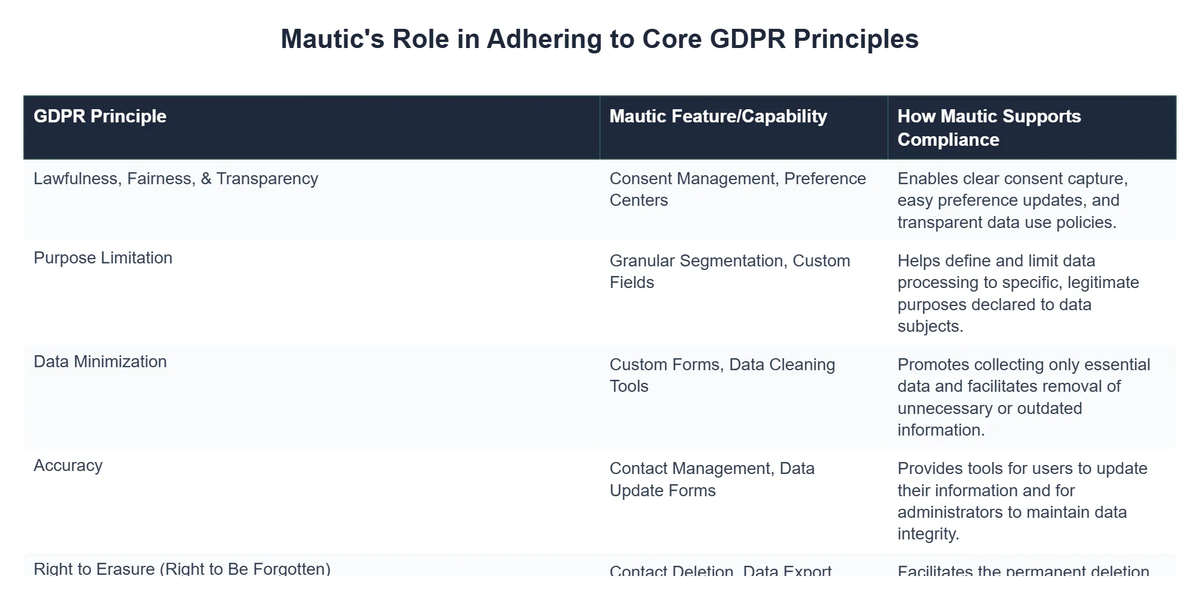
Mautic’s architecture and feature set are designed with privacy in mind, allowing you to implement mechanisms for consent management, data access, and data deletion in line with GDPR requirements.
🛠️ Mautic’s Role in Your Data Processing
When you use Mautic, you are typically the “data controller” (determining why and how personal data is processed), and Mautic (or your hosting provider for Mautic) acts as a “data processor” (processing data on your behalf). Mautic offers the flexibility needed to tailor your data processing activities to your specific compliance needs, whether you’re using a self-hosted instance or a managed service.
⚙️ Key Mautic Features for Data Protection
Mautic offers several functionalities that are crucial for meeting GDPR requirements. Leveraging these features correctly is vital for your compliance strategy.
Consent Management
GDPR emphasizes explicit, informed consent. Mautic provides the mechanisms to capture and manage this consent effectively:
- ✅ Custom Fields for Opt-in Status: You can create custom fields to record explicit consent, specifying the purpose for which data is collected (e.g., “Opt-in to Email Newsletter,” “Consent for Website Tracking”).
- ➡️ Form Configuration: Mautic forms allow you to add checkboxes for consent, ensuring that users actively opt-in rather than pre-checked boxes. You can make these fields mandatory.
- 💡 Double Opt-in: While not strictly required by GDPR, double opt-in is a highly recommended best practice. Mautic campaigns can be configured to send a confirmation email, requiring users to click a link to verify their subscription.
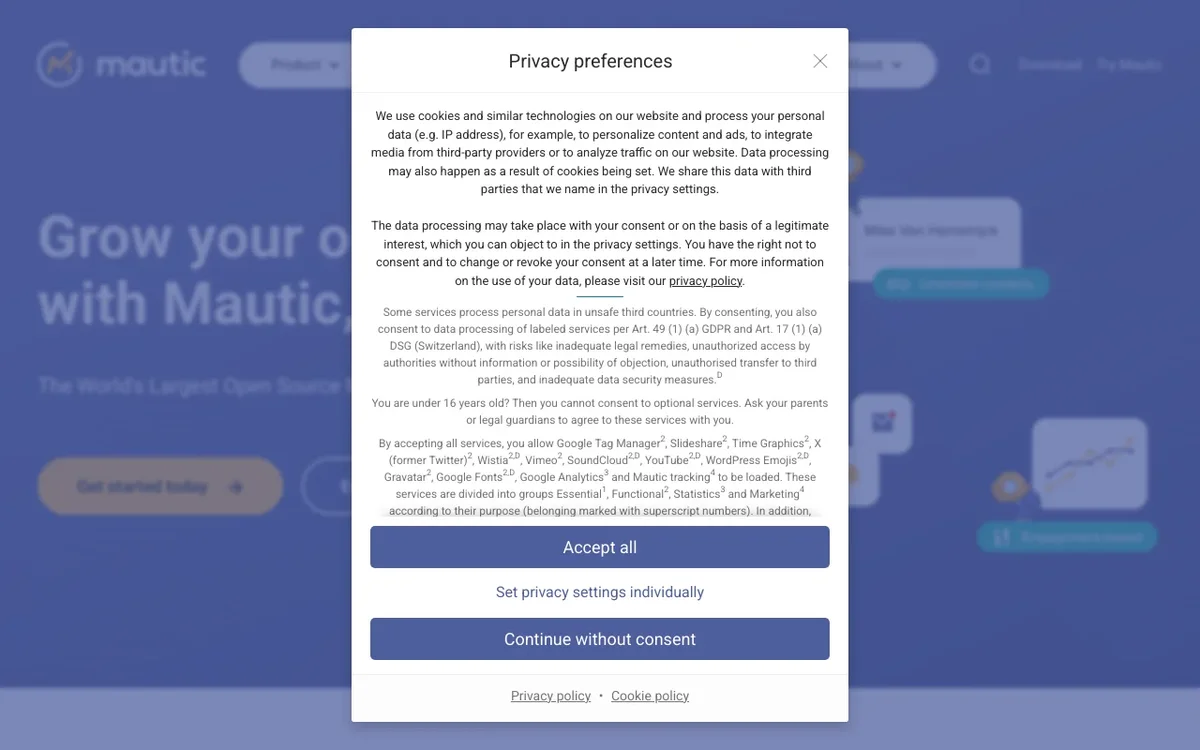
- 🛡️ Cookie Consent: Mautic’s tracking capabilities utilize cookies. You can integrate third-party cookie consent managers with your Mautic instance to ensure visitors provide consent before Mautic’s tracking script loads. You can find more information on Mautic’s privacy and GDPR features on the Mautic official website.
Right to Access and Data Portability
Data subjects have the right to request access to their personal data and to receive it in a structured, commonly used, and machine-readable format.
- ✅ Contact Export: Mautic allows you to export individual contact data from the backend, providing a comprehensive record of the data held on a specific data subject.
- ➡️ API Access: For more automated processes, Mautic’s API can be used to programmatically retrieve contact data, facilitating data portability requests.
Right to Erasure (“Right to be Forgotten”)
Individuals have the right to request the deletion of their personal data under certain circumstances.
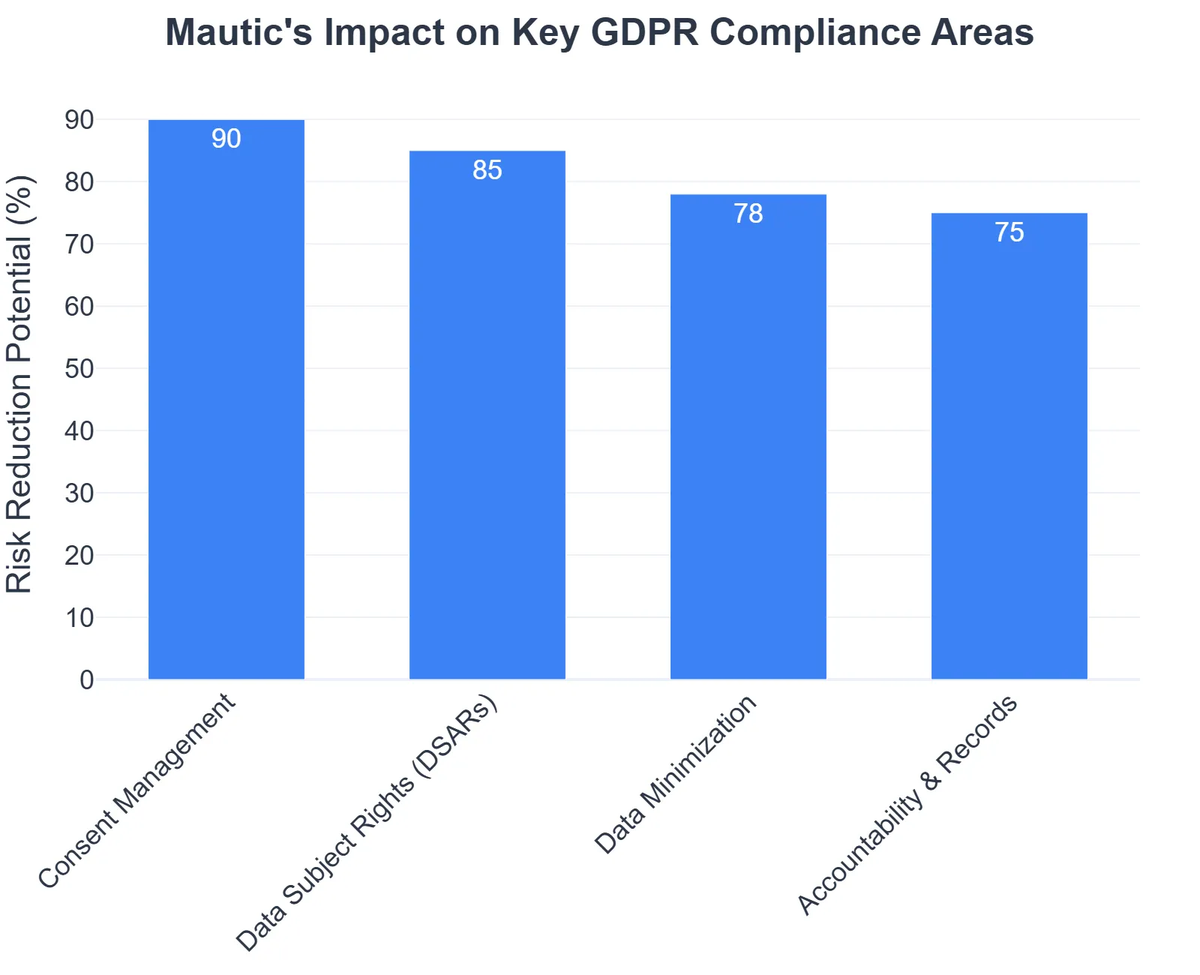
- 💡 Contact Deletion: Mautic provides a straightforward way to delete individual contacts and all associated data from the system. This ensures that their information is permanently removed from your Mautic instance.
Data Minimization and Security by Design
Mautic’s flexibility supports these core GDPR principles:
- 🛡️ Flexible Field Creation: You only collect the data you truly need for your specified purposes, preventing unnecessary data collection.
- 🔐 Self-Hosting Control: If self-hosting Mautic, you have direct control over your server environment, allowing you to implement robust security measures (encryption, access controls, firewalls) to protect data from unauthorized access or breaches. For expert guidance on setting up and securing your Mautic instance, consider engaging with Expert Mautic Services: Your Marketing Automation Solution.
Implementing GDPR Best Practices with Mautic
Having the features is one thing; implementing them correctly is another. Here’s how to apply GDPR best practices using Mautic.
Mautic
Unlock unparalleled marketing automation with Mautic, the open-source platform designed for ultimate control and flexibility. Break free from restrictive vendor lock-in and tailor your campaigns precisely to your audience’s journey. From email nurturing to lead scoring and personalized content, Mautic empowers you to optimize every touchpoint, driving higher engagement and conversions. It’s the robust solution for marketers who demand customization and data ownership to scale effectively.
Audit Your Existing Data
Before you begin, understand what data you currently hold in Mautic. This involves:
- ✅ Identifying all personal data fields you use.
- ➡️ Understanding the source of this data (e.g., website forms, imports).
- 💡 Determining the legal basis for processing each type of data (e.g., consent, legitimate interest, contract).
Update Your Privacy Policy
Your privacy policy must be clear, transparent, and easily accessible. Ensure it details:
- 🛡️ What data you collect via Mautic.
- 🔐 Why you collect it (purpose).
- ⚙️ How long you retain it.
- 📊 The legal basis for processing.
- 📈 How data subjects can exercise their rights (access, rectification, erasure).
Configure Forms for Explicit Consent
Every Mautic form used for collecting personal data should be GDPR-compliant:
- ✅ Include clear, concise language explaining what users are opting into.
- ➡️ Use un-checked checkboxes for consent (no pre-ticked boxes).
- 💡 Provide links to your privacy policy and terms of service.
- 🛡️ Consider implementing double opt-in for new subscribers. Our Mautic Dashboard Tutorial: A Complete Guide provides insights into form creation and management within Mautic.
Establish Data Subject Request Procedures
You need a clear, documented process for handling requests from data subjects:
- 🔐 Access Requests: How will you verify identity and provide the requested data export from Mautic?
- ⚙️ Erasure Requests: How will you ensure all data is deleted from Mautic and any integrated systems?
- 📊 Rectification Requests: How will you update inaccurate data in Mautic?
- 📈 Withdrawal of Consent: How will you handle unsubscribe requests and update consent status in Mautic?
Regular Data Audits and Cleaning
GDPR is an ongoing process. Regularly review your Mautic data:
- ✅ Delete data that is no longer necessary for the purpose it was collected.
- ➡️ Verify consent records and ensure they are accurate.
- 💡 Address any data inaccuracies promptly.
Common Challenges and Solutions
Even with Mautic’s capabilities, certain challenges can arise in your GDPR journey.
❗ User Responsibility
Challenge: The biggest misconception is that Mautic automatically makes you GDPR compliant. It does not. Solution: Recognize that Mautic is a tool. Your legal team, internal processes, and diligent application of the platform’s features are what ensure compliance. Stay informed about GDPR updates and ensure your use of Mautic aligns with the latest interpretations.
🔗 Integration Complexities
Challenge: Many businesses integrate Mautic with other systems (CRMs, payment gateways, analytics tools). Ensuring data privacy across all these touchpoints can be complex. Solution: Conduct a data flow audit for every integration. Ensure each third-party service is also GDPR compliant and has appropriate Data Processing Agreements (DPAs) in place with you. Pay close attention to how data is transferred and stored between systems.
Beyond Mautic: Your Ongoing Compliance Responsibilities
While Mautic is a powerful ally, GDPR compliance extends beyond your marketing automation platform. It’s a holistic organizational commitment.
- ✅ Seek Legal Advice: This article provides general information. For specific legal guidance tailored to your business and its use of Mautic, always consult with a qualified legal professional specializing in data protection.
- ➡️ Staff Training: Ensure that all employees who handle personal data, especially those using Mautic, understand GDPR principles and your company’s privacy policies and procedures.
- 💡 Data Processing Agreements (DPAs): If you use any third-party services that process personal data on your behalf (e.g., Mautic hosting providers, email senders), ensure you have robust DPAs in place with them.
- 🛡️ Incident Response Plan: Have a plan in place for responding to data breaches, including notification procedures to relevant authorities and affected data subjects.
Recommended Video
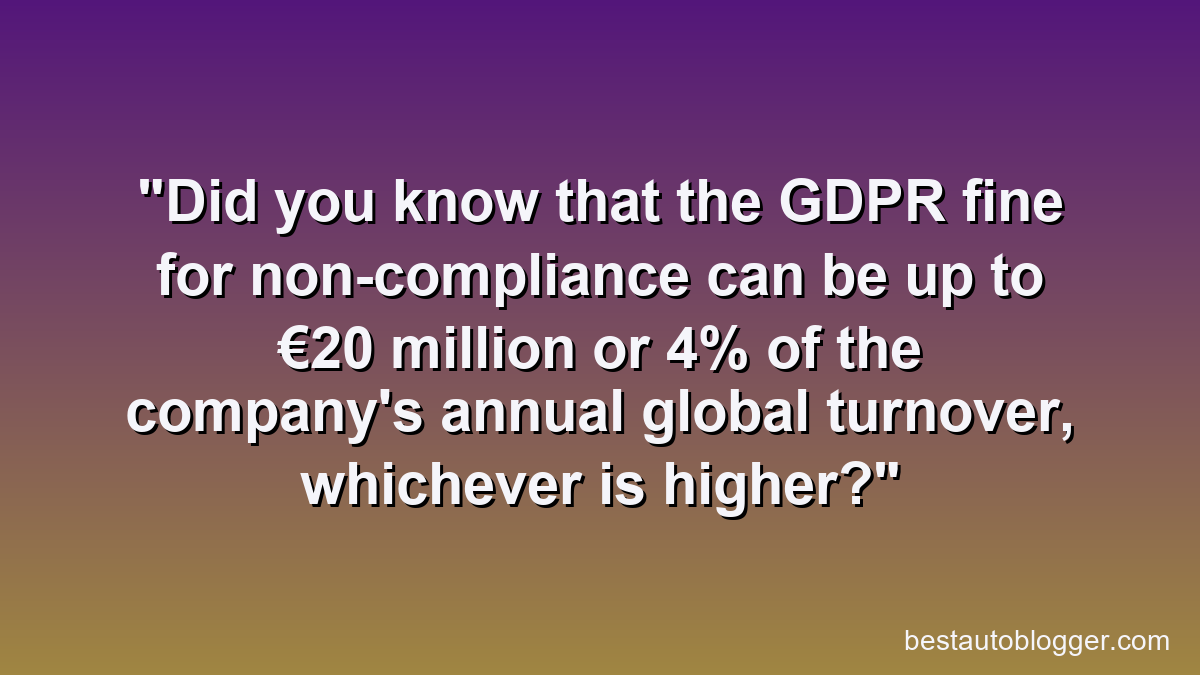
Navigating the complexities of GDPR can seem daunting, but with a robust platform like Mautic and a clear understanding of your responsibilities, you can build a marketing strategy that respects privacy by design. Mautic provides the essential features for managing consent, facilitating data subject rights, and maintaining data security. However, true compliance is an ongoing commitment, requiring diligent implementation of best practices, regular audits, and an unwavering focus on protecting personal data.
By thoughtfully integrating Mautic into a comprehensive GDPR strategy, you not only avoid potential penalties but also build trust with your audience, fostering stronger, more transparent relationships. Prioritize privacy, and let Mautic empower your ethical marketing efforts.
What Mautic features support GDPR compliance?
Mautic offers features like consent management, data deletion, data export, and audit trails to help users comply with GDPR requirements.
Is Mautic inherently GDPR compliant?
Mautic provides the tools, but compliance depends on how it’s configured and used. Organizations must implement their own policies and processes to ensure full adherence.
How does Mautic handle user consent?
Mautic allows for granular consent management, enabling users to define and track different types of consent for data processing and communication, aligning with GDPR’s explicit consent requirements.
What are the key steps for GDPR compliance with Mautic?
Key steps include understanding data flows, obtaining explicit consent, facilitating data access/deletion requests, and regularly auditing your Mautic instance for compliance.
Mautic
Ready to take the next step? See how Mautic can help you achieve your goals.