




Black Hat vs. White Hat SEO: Risks & Rewards
In the dynamic world of search engine optimization (SEO), marketers and website owners often find themselves at a crossroads, choosing between two fundamentally different paths to visibility: white hat and black hat SEO. While both aim to achieve higher search engine rankings, their methodologies, ethical considerations, and long-term outcomes couldn’t be more divergent. Understanding these distinctions is paramount for anyone looking to build a sustainable online presence.
| Feature | Semrush | Ahrefs |
|---|---|---|
| Core Feature Set (Keyword Research, Backlink Analysis, Site Audit) | Extensive, industry-leading tools for comprehensive SEO, PPC, and competitive analysis. | Comprehensive suite for keyword research, backlink analysis, site audits, rank tracking, and competitor analysis. |
| Pricing & Plans | Tiered subscriptions (Pro, Guru, Business), starting around $129.95/month, with custom enterprise options. | Premium pricing, starting from $99/month, tiered plans based on data and features. |
| User Interface & Ease of Use | Feature-rich and powerful, can be overwhelming for new users due to depth; requires learning curve. | Intuitive, clean, and powerful interface; easy to navigate for both beginners and advanced users. |
| Data Coverage & Accuracy | Vast global databases covering billions of keywords and backlinks; generally highly reliable and frequently updated. | Extensive and highly accurate backlink index (largest of its kind), vast keyword databases, frequently updated. |
| Content Marketing & SEO Writing Tools | Includes Content Marketing Platform, SEO Writing Assistant, Topic Research, and content optimization features. | Content Explorer for research, content gap analysis; offers some keyword-based writing insights, but not a full writing assistant. |
| Customer Support & Resources | Excellent, responsive support via chat/email; extensive knowledge base, tutorials, Semrush Academy, and blog. | Excellent, responsive live chat/email support; extensive knowledge base, Ahrefs Academy, blog, and tutorials. |
| Visit Site | Visit Site |
💡 Key Takeaways
- Black hat SEO offers quick but risky gains, often leading to severe penalties and long-term damage.
- White hat SEO focuses on long-term, sustainable, ethical growth by adhering to search engine guidelines.
- Choosing white hat strategies builds genuine authority, enhances user experience, and ensures resilient rankings.
- Understanding the differences is crucial for making informed decisions that safeguard your website’s future in search results.
“While black hat SEO might offer a tempting shortcut, the inevitable long-term consequences of penalties and diminished brand trust far outweigh any fleeting gains. Sustainable success in SEO is built on the ethical, user-centric foundation of white hat practices.”
— Liam Carter, Senior SEO Strategist
This comprehensive guide delves deep into the principles, techniques, and consequences of these opposing strategies. We’ll explore the inherent risks of employing aggressive, manipulative tactics often associated with black hat SEO and compare them against the enduring rewards of ethical, user-centric approaches. By the end, you’ll have a clear understanding of why playing by the rules not only ensures safety but also fosters long-term success.
In This Article
- → Black Hat vs. White Hat SEO: Risks & Rewards
- — 💡 Key Takeaways
- → Understanding White Hat SEO: The Ethical Path to Visibility
- — ✅ Core White Hat Principles
- — 💡 Key White Hat Techniques
- → Exploring Black Hat SEO: The Risky Shortcuts
- — ⛔ Common Black Hat Techniques
- → Navigating the Gray Hat Zone: Ambiguity and Elevated Risk
- — ⚠️ Examples of Gray Hat Tactics
- → White Hat vs. Black Hat: A Comparative View of Risks & Rewards
- — ⚖️ Key Differences and Outcomes
- → Building a Sustainable Future: Embracing White Hat Strategies
- — ⚙️ Leveraging Tools for Ethical SEO Success
- — 🏆 Key Principles for Lasting SEO Growth
- → Conclusion: The Undeniable Power of Ethical SEO
Understanding White Hat SEO: The Ethical Path to Visibility
White hat SEO refers to a set of practices that adhere to search engine guidelines, most notably Google’s Webmaster Guidelines. These strategies focus on providing genuine value to users, creating a positive user experience, and building a sustainable online presence. Think of it as investing in the long-term health and authority of your website.
✅ Core White Hat Principles
- User-Centric Focus: Prioritizing the needs and experience of your audience above all else.
- Quality Content: Creating original, valuable, relevant, and engaging content that genuinely answers user queries and solves problems.
- Transparency & Honesty: Avoiding deceptive practices and ensuring all website information is accurate and clear.
- Sustainable Growth: Aiming for organic, steady improvement in rankings and traffic that is resistant to algorithm updates.
- Adherence to Guidelines: Strictly following search engine rules to avoid penalties.
💡 Key White Hat Techniques
White hat SEO encompasses a wide range of techniques, all designed to earn rankings legitimately:
- ➡️ High-Quality Content Creation: This is the cornerstone. Producing in-depth articles, guides, videos, and infographics that provide real value. For deeper insights into crafting effective content, explore our guide on Essential SEO Process: A Step-by-Step Guide.
- ➡️ User Experience (UX) Optimization: Ensuring your website is fast, mobile-friendly, easy to navigate, and visually appealing. This includes optimizing Core Web Vitals.
- ➡️ Ethical Link Building: Earning backlinks from reputable sources through valuable content, outreach, and genuine relationships, not by buying or manipulating links.
- ➡️ Keyword Research & Optimization: Identifying relevant keywords your target audience uses and naturally integrating them into your content without stuffing. Tools like Semrush and Ahrefs are indispensable here, helping you find high-value keywords and analyze competitor strategies. If you’re looking for the best tools, check out Best Keyword Research Tools for SEO Success.
- ➡️ Technical SEO Audits: Optimizing site architecture, crawlability, indexability, and schema markup to help search engines understand your content better.
Exploring Black Hat SEO: The Risky Shortcuts
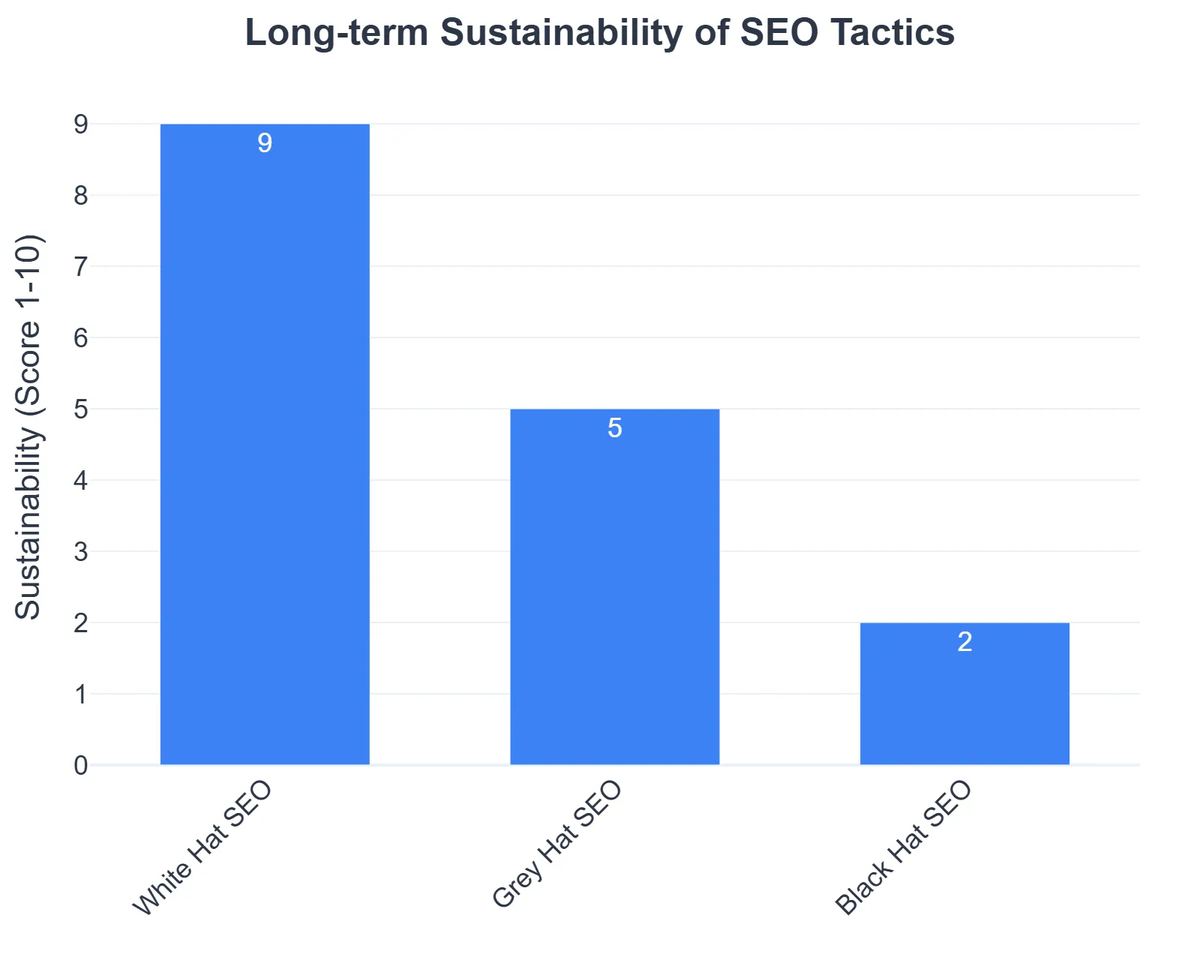
In stark contrast, black hat SEO techniques involve strategies that explicitly violate search engine guidelines. These methods are designed to manipulate search engine algorithms for rapid, albeit short-lived, ranking improvements. While they might offer quick wins, they come with significant risks that can devastate a website’s online presence.
The philosophy behind black hat marketing is to exploit loopholes and weaknesses in search engine algorithms, rather than to genuinely serve users. This approach is inherently unstable and carries severe consequences.
⛔ Common Black Hat Techniques
Here are some of the most prevalent black hat SEO strategies you should unequivocally avoid:
- 🚫 Keyword Stuffing: Overloading a webpage with keywords in an attempt to manipulate rankings, often resulting in unnatural and unreadable content.
- 🚫 Cloaking: Presenting different content or URLs to search engine spiders than to human users. This is a direct attempt to deceive search engines about a page’s true content.
- 🚫 Private Blog Networks (PBNs) & Link Farms: Creating or buying networks of low-quality websites solely for the purpose of generating artificial backlinks to a target site. This is a severe violation of Google’s guidelines on link schemes.
- 🚫 Hidden Text or Links: Placing text or links on a page that are invisible to users (e.g., matching text color to background, using tiny fonts, hiding behind images).
- 🚫 Content Scraping & Duplication: Stealing content from other websites and publishing it as your own without adding any unique value or citing the original source.
- 🚫 Automated Queries & Click Fraud: Using bots to generate fake traffic or clicks to manipulate rankings or ad revenue.
Navigating the Gray Hat Zone: Ambiguity and Elevated Risk
Between the clear ethical lines of white hat and the outright violations of black hat lies a more ambiguous territory: gray hat SEO. These practices aren’t explicitly forbidden by search engine guidelines, but they operate in a morally or ethically questionable area. They carry more risk than white hat methods but less immediate and severe penalties than pure black hat tactics.
Gray hat strategies often walk a fine line, aiming to push the boundaries without outright breaking rules. However, search engine algorithms are constantly evolving, and what might be considered “gray” today could easily become “black” tomorrow.
⚠️ Examples of Gray Hat Tactics
- ➡️ Expired Domain Usage: Acquiring an expired domain with a strong backlink profile and redirecting its authority to a new site. This can be legitimate if the new content is relevant, but often it’s used to unfairly boost a new site.
- ➡️ Aggressive Guest Blogging: While guest blogging is white hat, excessive, low-quality guest posts purely for link acquisition can venture into gray territory.
- ➡️ High-Volume, Low-Quality Content: Publishing a large volume of content that is technically original but lacks depth or significant value, primarily to capture long-tail keyword traffic.
- ➡️ Buying “Legitimate” Aged Domains: Purchasing domains that have a history and real authority, then leveraging them for new content or to host PBN-like structures, blurring the lines of ethical link acquisition.
- ➡️ Intensive Internal Linking on Unrelated Content: Over-optimizing internal links with exact match anchor text on a site, even if the content isn’t perfectly relevant, to pass excessive link equity.
The danger with gray hat is its unpredictability. While it might offer quicker results than pure white hat, the potential for penalties, especially as algorithms become more sophisticated, is ever-present.
White Hat vs. Black Hat: A Comparative View of Risks & Rewards
The choice between white hat and black hat SEO boils down to a fundamental decision about your long-term business strategy. One offers sustainable growth, while the other provides fleeting gains at significant cost.
⚖️ Key Differences and Outcomes
Let’s look at a direct comparison of the risks and rewards associated with each approach:
How ‘Peak Performance Gear’ Achieved Sustainable Growth with White Hat SEO
❓The Challenge
Peak Performance Gear, an online retailer of outdoor equipment, experienced significant traffic volatility and a Google penalty due to past reliance on aggressive, black hat SEO tactics.
💡The Solution
They pivoted entirely to White Hat SEO, focusing on creating high-quality, user-centric product reviews and guides, optimizing their website for superior user experience (UX), and earning authoritative backlinks through genuine outreach and valuable content.
🏆The Result
Within 12 months, their organic traffic rebounded by 110%, direct sales from search engines increased by 75%, and keyword rankings for their core products consistently achieved top 5 positions without fear of penalties.
- Philosophy:
- ✅ White Hat: User-first, value creation, long-term sustainability.
- 🚫 Black Hat: Algorithm-first, manipulation, short-term gains.
- Compliance:
- ✅ White Hat: Full adherence to search engine guidelines.
- 🚫 Black Hat: Direct violation of search engine guidelines.
- Risk of Penalties:
- ✅ White Hat: Extremely low risk of algorithmic or manual penalties.
- 🚫 Black Hat: High risk of severe penalties, including de-indexing from search results. According to Moz, focusing on asking “better questions” about the user’s intent and value can help steer clear of black hat tactics (Moz).
- Sustainability & Longevity:
- ✅ White Hat: Builds enduring authority and rankings that withstand algorithm updates.
- 🚫 Black Hat: Results are often temporary; tactics quickly become ineffective or lead to detection and penalties.
- Brand Reputation:
- ✅ White Hat: Enhances brand credibility and trust.
- 🚫 Black Hat: Can severely damage brand reputation, leading to a loss of trust and customer base.
- Return on Investment (ROI):
- ✅ White Hat: Slower initial ROI, but highly compounding and sustainable over time.
- 🚫 Black Hat: Potentially quick initial ROI, but often results in significant negative ROI due to penalties and lost traffic.
The choice is clear for any business aiming for long-term success. While black hat might seem tempting for quick wins, its inherent instability and potential for catastrophic failure make it an unwise investment. For more on general SEO strategies, Gen3 Marketing provides a good overview of the differences between white hat and black hat (Gen3 Marketing).
Building a Sustainable Future: Embracing White Hat Strategies
The landscape of SEO is constantly evolving, with search engines becoming increasingly sophisticated in identifying manipulative practices. This continuous advancement reinforces the necessity of adopting white hat strategies for any meaningful and lasting online success. Embracing white hat SEO is not just about avoiding penalties; it’s about building a robust, authoritative, and user-friendly website that search engines genuinely want to rank.
⚙️ Leveraging Tools for Ethical SEO Success
To effectively implement white hat SEO, leveraging the right tools is crucial. These platforms provide the data and insights needed to make informed, ethical decisions:
- Semrush: An all-in-one SEO suite that helps with comprehensive keyword research, competitor analysis, site audits, content optimization, and ethical link building opportunities. Its robust features allow you to identify genuine content gaps and technical issues that improve user experience and crawlability.
- Ahrefs: Renowned for its powerful backlink analysis, Ahrefs helps identify high-quality link opportunities, analyze competitor link profiles, and monitor your own backlink health. It’s also excellent for content exploration and keyword research, ensuring your content strategies align with user intent.
- Google Search Console: Essential for monitoring your site’s performance in Google Search, identifying indexing issues, and understanding how Google sees your pages. It’s a direct line to Google’s insights, helping you stay compliant.
By using these tools, you can systematically improve your website’s organic visibility through legitimate means, ensuring that your efforts contribute to long-term growth rather than short-term risks. For a deeper dive into all aspects of optimization, refer to The Ultimate Guide to SEO (Search Engine Optimization).
🏆 Key Principles for Lasting SEO Growth
- ✅ Prioritize User Experience: A fast, responsive, and easy-to-navigate website keeps users engaged, which signals quality to search engines.
- ✅ Create Exceptional Content: Focus on depth, originality, and authority. Be the best resource for your target audience’s queries.
- ✅ Earn High-Quality Backlinks: Content that is truly valuable will naturally attract links. Focus on building relationships and creating shareable assets.
- ✅ Optimize for Mobile: With the majority of searches happening on mobile devices, a mobile-first approach is non-negotiable.
- ✅ Stay Updated with Algorithm Changes: Google’s algorithms are always evolving. Staying informed helps you adapt your white hat strategies.
Recommended Video
Conclusion: The Undeniable Power of Ethical SEO
The debate between black hat vs. white hat SEO isn’t truly a debate for businesses serious about long-term success. While the allure of quick rankings through manipulative black hat SEO strategies can be strong, the inevitable risks—ranging from severe penalties and de-indexing to irreparable brand damage—far outweigh any temporary rewards.
White hat SEO, on the other hand, embodies a strategy of integrity, sustainability, and genuine value creation. It’s an investment in your website’s future, building a foundation of authority and trust with both users and search engines. By focusing on high-quality content, excellent user experience, and ethical link building, you’re not just ranking for today; you’re building a digital asset that will continue to perform and grow for years to come. In the realm of search engine optimization, the ethical path is unequivocally the only path to true and lasting success.
What is the primary difference between Black Hat and White Hat SEO?
Black Hat SEO uses unethical, guideline-violating tactics for quick ranking boosts, risking penalties. White Hat SEO employs ethical, guideline-compliant methods focused on long-term, sustainable growth and user value.
Can using Black Hat SEO techniques permanently damage a website’s ranking?
Yes, persistent use of black hat techniques can lead to severe and potentially permanent penalties from search engines, including de-indexing, making it extremely difficult to recover visibility.
Why is White Hat SEO considered the better long-term strategy?
White Hat SEO is sustainable because it focuses on building genuine authority, providing value to users, and adhering to search engine guidelines. This approach leads to resilient rankings, avoids penalties, and fosters long-term brand trust.
Semrush
Ready to take the next step? See how Semrush can help you achieve your goals.